
Pool alkalinity calculator: exact sodium bicarb dose for your pool
Total alkalinity is the buffer that keeps pH stable. The math is simple, sodium bicarb at 1.4 kg per 50,000 L raises TA by 10 ppm, but the dose scales precisely with your pool’s volume. Here’s the math and the table.
Last updated: 2 June 2026
Total alkalinity (TA) is the most under-measured parameter in residential pool chemistry, and the most consequential. TA buffers pH against rapid changes, with proper TA, pH adjustments hold for days; without it, pH bounces wildly with every chlorine dose, rain event, or swimmer.
The target for most Australian residential chlorine pools is 80–120 ppm, with 100 ppm being the safe default. This guide covers the exact dosing math for adjusting TA, plus a reference table you can apply to your pool’s specifics.
Raising total alkalinity
The product is sodium bicarbonate, known as baking soda, bicarb soda, or alkalinity up. Pool-grade product is identical to food-grade, same chemistry, often the same supplier.
The math: 1.4 kg of sodium bicarbonate per 50,000 L of pool water raises total alkalinity by 10 ppm.
Dose reference table
| Pool size (L) | 10 ppm | 20 ppm | 40 ppm | 80 ppm |
|---|---|---|---|---|
| Sodium bicarbonate dose (kg) to raise TA | ||||
| 20,000 | 0.56 kg | 1.12 kg | 2.24 kg | 4.48 kg |
| 30,000 | 0.84 kg | 1.68 kg | 3.36 kg | 6.72 kg |
| 50,000 | 1.40 kg | 2.80 kg | 5.60 kg | 11.2 kg |
| 70,000 | 1.96 kg | 3.92 kg | 7.84 kg | 15.7 kg |
| 100,000 | 2.80 kg | 5.60 kg | 11.2 kg | 22.4 kg |
Application procedure
- Calculate the dose from the table above.
- Split the dose if it’s more than 2 kg, add in increments of 2 kg, separated by 4 hours.
- Dissolve each portion in a bucket of warm pool water before adding.
- Pour the dissolved solution through the skimmer with the pump running.
- Wait 12 hours for full distribution and re-testing.
Why split large doses: adding 5+ kg of sodium bicarb in one dose can create a temporary cloud of undissolved powder that takes hours to dissolve, during which time pH spikes high before settling. Split doses prevent this.
Lowering total alkalinity, the aeration method
Lowering TA is trickier than raising it. The standard approach uses muriatic acid plus aeration.
The procedure
- Lower pH to 7.0–7.2 with muriatic acid. This drops TA somewhat as a side effect.
- Aerate the pool, point return jets upward to break the surface, or use a fountain feature. Aeration drives off dissolved CO₂.
- Wait 24–48 hours. pH will rise back toward 7.4–7.6 from CO₂ off-gassing, but TA will stay low.
- Re-test. Each cycle drops TA by ~10–20 ppm.
- Repeat until TA is in range. Multiple cycles may be needed.
This is the only practical method to lower TA without driving pH dangerously low. Adding only acid (without aeration) drops pH too far before TA moves meaningfully.
Common alkalinity adjustment mistakes
- Confusing sodium bicarbonate with sodium carbonate. They look similar in pool shop packaging. Sodium bicarbonate (baking soda) raises mainly TA. Sodium carbonate (soda ash) raises mainly pH. Different chemicals, different purposes.
- Adding TA-up without testing. Many pool owners add a bag of “alkalinity up” routinely without checking TA. This pushes TA above 140 ppm where it locks pH high.
- Adding bicarb to lower TA. Counter-intuitive but happens. Always confirm direction before dosing.
- Using muriatic acid alone to lower TA. Drops pH dangerously low. Use the aeration method instead.
- Re-testing within hours of adding. Sodium bicarb takes 12 hours to fully dissolve and distribute.
Sources & references
- Trouble Free Pool, ABCs of Pool Water Chemistry
- ANSI/APSP-11, Water Quality Standards in Public Pools
- AS 3633-1989, Private swimming pools (Australian Standard)
Frequently asked questions
How much baking soda to raise pool alkalinity?
1.4 kg of sodium bicarbonate per 50,000 L raises total alkalinity by 10 ppm. Use the dose table in this guide for other pool sizes and target changes.
Is baking soda the same as pool alkalinity up?
Yes, both are sodium bicarbonate (NaHCO₃). Pool-store packaging carries a markup; food-grade baking soda from the supermarket works identically. Pool ‘alkalinity up’ is the same chemical, just in larger bags.
How do I lower pool alkalinity?
Use the aeration method: lower pH to 7.0–7.2 with muriatic acid, then aerate the pool (point return jets upward or use a fountain). pH rises back via CO₂ off-gassing, but TA stays low. Repeat over several days.
What’s the difference between sodium bicarbonate and sodium carbonate?
Sodium bicarbonate (baking soda) raises mainly TA with small pH effect. Sodium carbonate (soda ash) raises mainly pH with smaller TA effect. They’re different products, don’t confuse them.
Why is my pool alkalinity always low?
Most common causes: acidic water sources (rainwater fill, tank water in some Australian regions), heavy use of acidic chlorine products (trichlor, dichlor), or just not checking TA monthly. Test and dose to bring it back to 80–120 ppm.
Does the Water Test Calculator app calculate alkalinity doses?
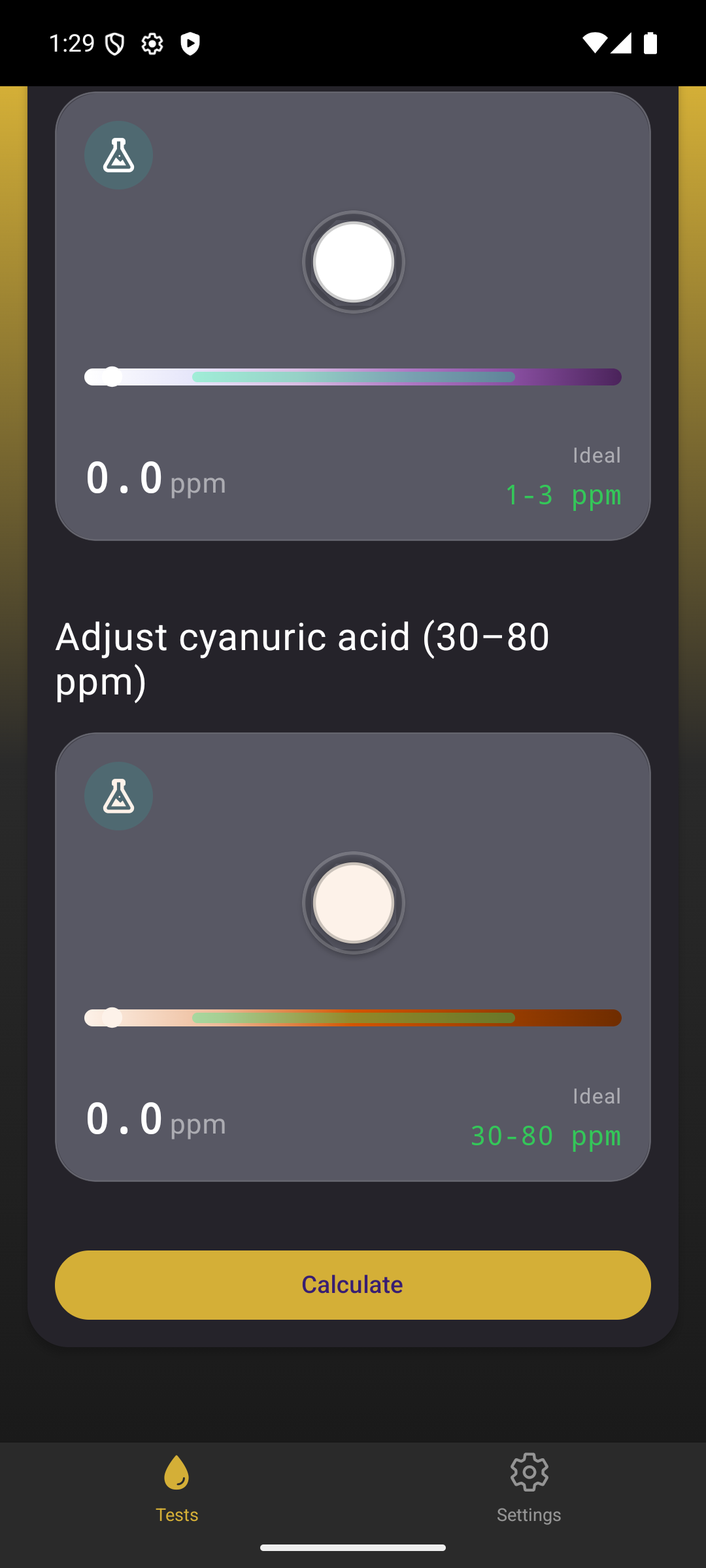
Yes. Enter your current TA, target TA, and pool volume, the app calculates the exact sodium bicarbonate dose. Launching on iOS and Android in approximately 10 days.
Get the launch alert + free checklist
Water Test Calculator launches on iOS and Android in ~10 days. Free with ads. Premium unlocks unlimited history, smart notifications, and ad-free testing.